Dynamics and prospects of e-commerce in Southeastern Europe: Key findings from the report "State of eCommerce 2025"„

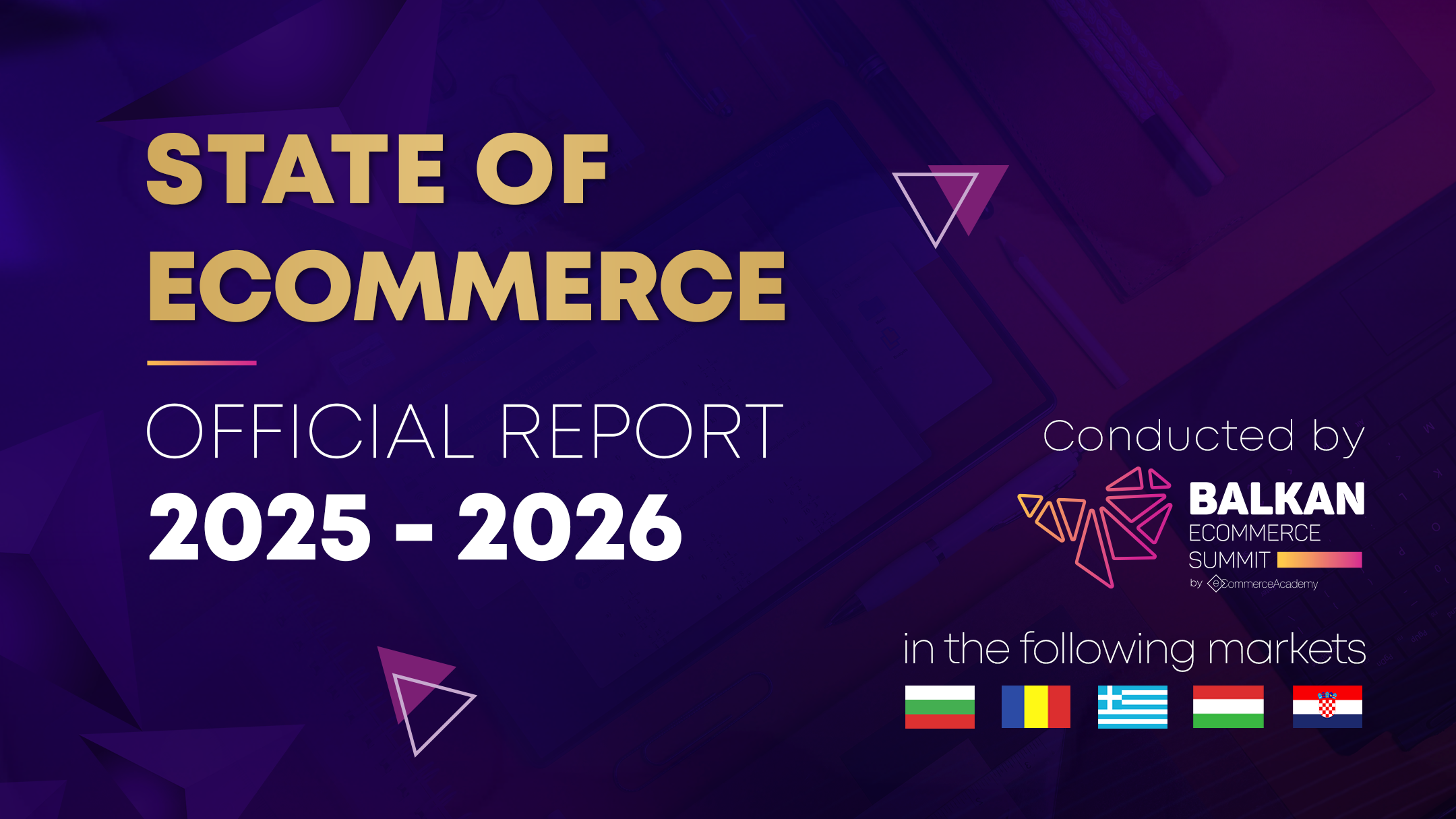
The Ruse Chamber of Commerce and Industry presents to its members a detailed analysis of online commerce in the region, based on the latest large-scale study by the Balkan eCommerce Summit. The report „The State of E-Commerce in the Balkans in 2025“ offers an in-depth look at five key markets – Bulgaria, Romania, Greece, Hungary and Croatia..
Despite the general trend towards growth, the data reveals that individual countries are developing at different speeds and exhibit specific market characteristics:
Leaders in growth and digital maturity
- Hungary: The country is establishing itself as a regional leader, with impressive 75% from businesses are reporting growth in online revenues. The share of companies selling entirely online is significant (41,7%), which puts Hungary at the top of digital dependency.
- Romania: The market is in active expansion mode, as 61,6% of merchants report annual growth. Romanian business demonstrates a high level of digital maturity – nearly 35% are purely online businesses, while others 23% generate over half of their turnover online.
Stability and development potential
- Croatia: Stable, albeit more polarized, dynamics are reported. Around 60% of respondents are seeing growth, but the market is still divided between strong online players and companies relying primarily on physical sales (nearly 45% of businesses generate less than 1/4 of their revenue online).
- Greece: The results are moderate but positive – 52,8% annual revenue growth. Barely 15% of companies operate only online, which, according to analysts, opens up huge opportunities for future entry and development of e-commerce.
Bulgaria's profile
Our country closes the ranking with a more varied growth profile (45,7% of companies reporting a jump in revenue), but with a notable core of all-digital brands. Close 35% of the Bulgarian participants operate on 100% online, which is an excellent base for future scaling of operations.
The study finds that operational difficulties are similar across the region – marketing and customer acquisition remain a major obstacle, followed by logistical issues. In terms of technology, the mobile-optimized website with responsive design dominates, while mobile apps remain more of an exception.
An interesting point is that trade remains mainly internal. In Bulgaria and Greece over 401% of respondents do not sell abroad at all. Analysis shows that the appetite for international expansion usually comes after achieving digital maturity in the local market..
Opportunities for Ruse business
The data from the report will form the basis of discussions during the upcoming Balkan eCommerce Summit 2026 (April 28-29, Sofia). The event is of utmost importance for companies from our region, as it provides practical solutions for overcoming marketing barriers and tools for international expansion.
As a partner of the event, the Ruse Chamber of Commerce and Industry provides its members with preferential conditions for participation. You can take advantage of 15% discount on ticket prices, by using a promo code rcci15.