Bulgaria’s Euro Adoption: Milen Dobrev on Euronews Romania About the Impact on Business and Investments

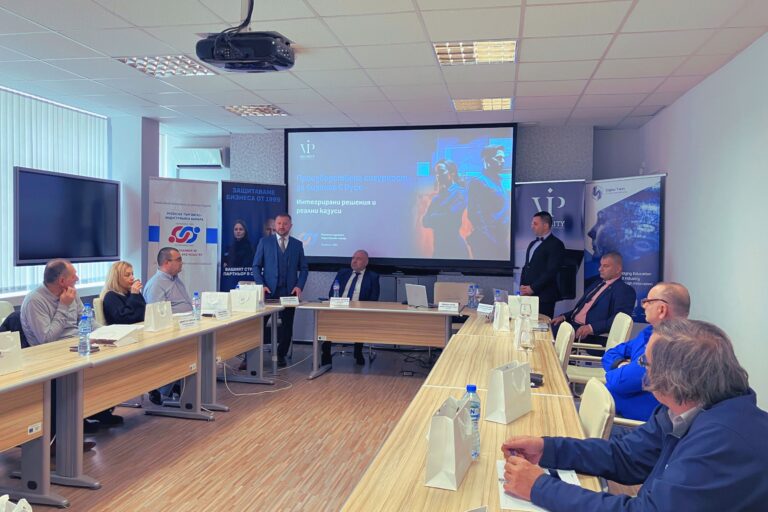
At the end of 2025, a Euronews Romania team visited Ruse to monitor public attitudes and business expectations just before Bulgaria's accession to the eurozone. In the analytical material, the executive director of the Ruse Chamber of Commerce and Industry (RCCI), Milen Dobrev, emphasized the key benefit for companies: higher predictability and security for investments, which may increase the interest of international investors in Bulgaria.
In parallel with the optimism of Bulgarian business, the report also presents assessments by Romanian economists, according to which the combination of eurozone membership and low taxes may increase competitive pressure on Romania and create an incentive for some Romanian companies to consider Bulgaria as an alternative location for business or investment.
1. Context: What the Business Says Through the Prism of The Interview
In the interview with Euronews Romania, Milen Dobrev points out that the adoption of the euro is perceived by businesses as guarantee of investment security and a better investment climate, with the expectation that this will support economic growth and accelerate the attraction of international partners.
On the Romanian side, the analysts in the material point out that the eurozone brings an additional layer of trust and predictability, and with competitive tax parameters, this could become a real advantage for Bulgaria in a regional plan.
2. Bulgaria in The Eurozone: Key Facts About the Transition
Bulgaria introduces the euro from January 1, 2026., with the official fixed rate being 1 EUR = 1.95583 BGN. The decision is part of the formal accession procedure, following an assessment of the fulfillment of the criteria and subsequent decisions by the European institutions.
The practical transition is organized to minimize operational risk for businesses and citizens:
- Automatic currency conversion of bank account balances in euros at the fixed exchange rate.
- Parallel circulation of lev and euro for a limited period (in the publicly announced parameters - for about a month), with the aim of smoothly withdrawing the lev from circulation.
3. What Are the Expected Business Benefits: Where Is the Effect Most Tangible?
3.1. Lower Currency Risk and Easier Pricing in The EU
For companies that work with partners in the eurozone, the costs and uncertainties associated with currency translation, currency margins and hedging are eliminated. This typically results in:
- clearer pricing (offers, contracts, catalogs);
- easier comparison of suppliers and conditions;
- lower transaction costs for some operations.
3.2. Investment Signal and Potential for Better Financing
The euro is seen as an additional „signal of confidence“ to the institutional environment. External markets often react by changing the risk assessment. A telling example is that after the key decisions on the adoption of the euro, rating agencies reported an improvement in the outlook/rating of Bulgaria.
3.3. Stronger Integration with The Single Market
More broadly, eurozone membership is a tool for deeper integration into the EU financial architecture and easier participation in cross-border value chains, especially in industries with European supply networks and long-term framework contracts.
4. Concerns: Inflation, Rounding and Confidence
The materials on Bulgaria also highlight the concerns of a part of society related to possible short-term price pressure and the risk of unfair practices during the transition.
International experience (including from recent accession countries) typically shows that:
- the effect of currency change on inflation is rather limited, but
- Public perception of price increases may be stronger if there is a lack of sufficient transparency and control over labeling and pricing.
5. Bulgaria and Romania: Competitive Dynamics and Real Factors for Investment Decisions
The report emphasizes the thesis that Bulgaria could become more attractive to some Romanian businesses if structural advantages such as tax predictability are added to eurozone membership.
Regarding the tax environment:
- In Bulgaria, the profit of companies is subject to 10% corporate tax (under the general regime).
- In Romania, the standard corporate tax rate is 16% (under the general regime).
It is important, however, that investment decisions are rarely made based on just one criterion. For companies comparing Ruse and nearby Romanian industrial locations, key factors include: availability of personnel, quality of infrastructure, administrative efficiency, energy costs, access to markets and sub-suppliers.
Additional context is provided by the picture of economic convergence in the EU: according to Eurostat data Bulgaria remains at the lowest level in GDP per capita (in PPS) in the EU in 2024 – 66% below the EU average, which explains why the topic of income and standard of living is strongly present in the public debate.
6. Practical Checklist for Companies: How To Manage the Transition to The Euro
To limit operational risks and seize the moment for optimization, companies can plan a few quick steps:
- Contracts and offers
- review of currency clauses, indexations, advances and penalties;
- standardization of price lists in EUR for EU customers.
- Accounting and ERP/CRM
- checking currency settings, rounding, VAT reports, integrations with banks;
- test scenarios for invoicing and payments in EUR.
- Cash registers, POS and labeling
- synchronization of cash systems and dual currency display software (if applicable);
- internal rules for controlling pricing and communication with customers.
- Liquidity and banking operations
- review of bank rates, credit line conditions and limits;
- cash and deposit management during the parallel circulation period.
- Communication to customers and partners
- a brief explanation of how the company is switching to EUR, how prices are formed and how payments are processed;
- ready-made answers to frequently asked questions (prices, deadlines, documents).
Video from Euronews Romania
The video is an external source and embedded by Euronews Romania. All rights reserved by their respective owners. For the original publication and additional context, please use the platform/channel of Euronews Romania.
Conclusion: What Does the Topic Mean for The Ruse Region?
Milen Dobrev's interview and the comments in Euronews Romania show two perspectives on the same change: for Bulgarian business, the euro is opportunity for stronger trust and investment dynamics, and for neighboring economies – competitive factor, which requires adaptation.
RCCI will continue to inform businesses about the practical aspects of the transition and the opportunities that arise from Bulgaria's deeper integration into the European economic and financial environment.
Sources
- Euronews Romania (transcription and quotes in a post by The Bridge of Friendship) (The Bridge of Friendship)
- ECB and European institutions – decisions and parameters on the introduction of the euro in Bulgaria (fixed exchange rate and date) (European Central Bank)
- Eurostat – GDP per capita (PPS), preliminary estimates for 2024 (European Commission)
- Reuters – market reactions/rating signals around the accession (Reuters)
- Ministry of Economy and Industry (BG) – corporate tax 10% (general regime) (Ministry of Economy)
- PwC Tax Summaries – Romania, corporate tax 16% (general regime) (Tax Summaries)
Note: This publication was prepared with the assistance of generative artificial intelligence, which supported the structuring and formulation of the content. The final text reflects the author’s expert contribution, which ensures its accuracy and practical relevance.