European Economic Survey 2026: Bulgarian Business Between Moderate Optimism and Increasing Cost Pressure

The Eurochambres Economic Survey 2026 (EES2026) paints a picture of cautious but real optimism among European businesses after several years of crises and uncertainty. The survey surveyed 41,090 companies from 28 countries, mainly small and medium-sized enterprises, and 816 companies from Bulgaria.
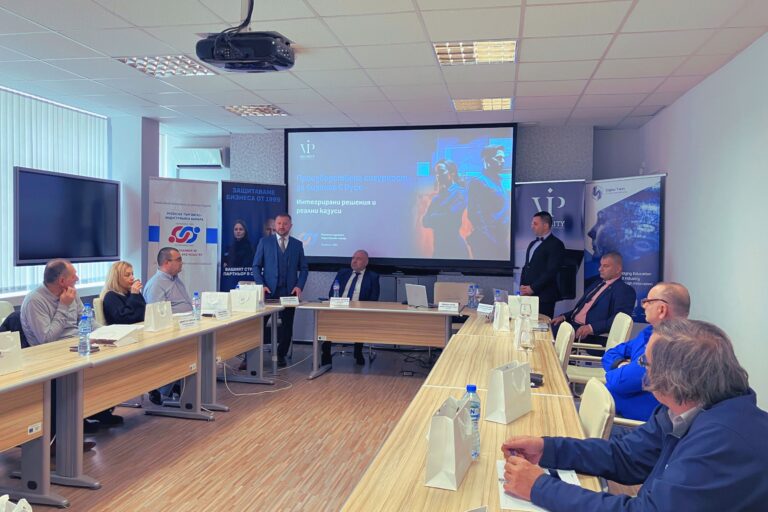
In our country, the study is coordinated by the Bulgarian Chamber of Commerce and Industry, and the Ruse Chamber of Commerce and Industry contributes to the presentation and analysis of the results among regional businesses. Against this background, Bulgarian business sends a clear message: expectations for 2026 are rather positive, but serious structural challenges are accumulating beneath the surface - first of all, labor costs, staff shortages and financial conditions.

1. Context: Slight Improvement in Sentiment, but Severe Structural Brakes
At the European level, all major indices – domestic sales, exports, investment, employment and general business confidence – show „less negative“ expectations compared to 2025, helped by weakening inflation and lower interest rates.
However, Eurochambres stresses that the road to sustainable growth remains long. Three factors emerge as the biggest obstacles for European companies in 2026:
- high labor costs;
- regulatory burden;
- shortage of qualified labor.
It is through this prism that the results for Bulgaria should be viewed.

2. The Bulgarian Economic Framework and Profile of The Participants
The Bulgarian responses fit into the context of moderate growth: according to the autumn forecasts, the country's GDP increases by about 3.2% at constant prices for the first half of 2025, and for the whole year growth is expected to be about 3%. For 2026, a slowdown in domestic demand growth is expected to be about 2.7%. Inflation is expected to calm down to about 3.9% by the end of the year, with an average annual level of about 3.6%.
Against this background, enterprises in Bulgaria are forming their expectations for sales, exports, employment, investments and business climate in 2026.

3. Expectations of Bulgarian Business for 2026
3.1. Domestic Sales: Positive, but Without a "Jump" Upwards
For domestic sales revenue in 2026:
- 43,19% of Bulgarian companies expect increase;
- 42,82% – no change;
- 13,99% – reduction.
Bulgaria ranks 10th out of 27 countries in the domestic sales expectations index – a position at the top of the ranking, but far from "explosive" growth.
The conclusion is that companies are betting on moderate market expansion, but do not expect to significantly exceed the levels of previous years.
3.2. Exports: More Uncertain Prospects
Regarding sales outside the country (including in the EU), the picture is more mixed:
- 40,95% are waiting increase of exports;
- 40,00% – no change;
- 19,05% – reduction.
Here too, Bulgaria ranks 10th out of 27 countries in the export expectations index, which suggests that companies are not relying on a strong external driver for growth in 2026, especially against the backdrop of geopolitical tensions and uncertainty in global trade.
3.3. Employment: Stability, but With Strong Wage Pressure
Regarding employment:
- 62,15% of companies expect no change in the number of employees;
- 27,62% – increase;
- 10,23% – reduction.
Bulgaria ranks 9th out of 28 countries in the employment expectations index. In practice, this means that employers prefer to retain staff despite slowing growth, as the costs and risks of hiring and training new staff in conditions of skill shortages are high – a trend that Eurochambres observes across Europe.
3.4. Investments: Caution and Focus on Efficiency
The expectations for investments in 2026 in Bulgaria are:
- 40,04% – increase;
- 45,74% – no change;
- 14,22% – reduction.
In this indicator, the country ranks 8th out of 28 countries. Similar to the European picture, businesses plan to continue investing, but rather in replacing outdated equipment and increasing energy and resource efficiency, rather than in large-scale new projects - due to the high cost of financing and the uncertain environment.
3.5. Business Climate and The Eurozone: High Expectations for Europe
Regarding the general development and business climate in 2026:
- 50,55% of Bulgarian enterprises expect more favorable development;
- 32,84% – no change;
- 16,61% – less favorable development.
Bulgaria ranks 2nd in Europe in the business climate expectations index – which is a clear signal of moderate but distinct optimism, especially in the context of the expected accession to the eurozone and the potential for improving the investment environment and export opportunities.

4. Main Challenges Facing Bulgarian Business in 2026
When asked about the three biggest challenges for the economic development of companies in 2026, the answers of Bulgarian enterprises are concentrated in several clearly outlined areas:
- Labor costs – 57,84%
- Lack of qualified workforce – 55,76%
- Financial conditions (interest rates, access to financing) – 50,00%
- Trade barriers – 28,31%
- Availability of energy and raw materials – 27,21%
- Regulatory burdens (administrative and financial) – 23,77%
This structure is somewhat different from the central European one, where the regulatory burden comes in second place, and "financial conditions" and "trade barriers" remain behind.
Below is an analytical look at the main three.
4.1. Labor Costs: Between Catching up With Income and Pressure on Margins
Labor costs remain the most significant challenge for both Europe and Bulgaria. The increase in wages in recent years, combined with the growth of social security contributions and additional payments for attracting and retaining staff, leads to:
- pressure on profits, especially in low value-added sectors;
- limiting opportunities for new investments;
- shifting focus towards automation and digitalization in an attempt to reduce dependence on labor-intensive processes.
At the same time, real income catching up with the EU is inevitable and socially necessary. Therefore, it becomes key increasing productivity – through technology, work organization and better management – not a „freezing“ of wages.
4.2. Skill Shortage: A Structural Risk to Growth
The lack of a qualified workforce is the second most important challenge for Bulgarian companies, with almost identical weight as labor costs.
The combination of negative demographic dynamics, migration and rapidly changing technological requirements leads to:
- chronic shortage of specialists in industry, ICT, healthcare and other key sectors;
- difficulties in expanding production even when there are orders;
- additional pressure to increase wages, which amplifies the effect of the previous point.
Eurochambres highlights that only about a fifth of small businesses in the EU systematically invest in ICT training, while in large companies the share is over 70%. This means that without active policies for upskilling and reskilling, the skills gap will deepen and Bulgarian businesses will lose competitiveness.
4.3. Financial Conditions: Price and Access to Resources
For half of Bulgarian companies, financial conditions are among the three most important challenges. The reasons include:
- increased interest rates and stricter lending criteria;
- need for self-participation in investment projects;
- limited knowledge of alternative sources of financing (capital markets, venture capital, specialized funds).
Although European ECB surveys show that many firms rely on internal funds and do not encounter formal „financing barriers“, the cost of capital remains a key factor in decision-making for new projects. For SMEs in Bulgaria, this often means postponing or scaling back investment plans.

5. Other Factors: Trade Barriers, Energy and Regulations
Although of lower severity, three more groups of challenges outline additional risk for Bulgarian business:
- Trade Barriers (28,31%) – against the backdrop of geo-economic fragmentation, protectionist measures and different regulatory regimes in markets outside the EU;
- Access to energy and raw materials (27,21%) – prices are more stable compared to previous years, but remain high and poorly predictable, especially for energy-intensive industries;
- Regulatory weights (23,77%) – complex procedures, frequent changes in legislation and high administrative cost of compliance, which take resources away from the core business.
At the European level, regulatory burden is now in second place among the challenges, and according to the EIB, it is one of the main factors deterring investment.

6. What Does This Mean for Economic Policy and For Companies?
Based on the Eurochambres Economic Survey 2026, several important areas can be highlighted, also relevant to the Bulgarian context:
- A more predictable and relaxed regulatory environment
- systematic reduction and simplification of administrative requirements, especially for SMEs;
- clearer, more stable and coordinated rules at national and European level.
- Addressing labor costs through productivity, not freezes
- incentives for investments in automation, digitalization and organizational improvement;
- considering measures to optimize the social security burden, especially for employers who actively invest in training and qualification.
- Systematic investments in skills and human capital
- closer partnership between business, educational institutions and organizations such as the BCCI and regional chambers to develop practice-oriented programs;
- facilitated access of SMEs to upskilling and reskilling programs.
- Better access to finance for SMEs
- simplification of procedures for European and national programs;
- development of consultancy and intermediary services through networks such as the Enterprise Europe Network and the chambers of commerce and industry.
- Support for the energy and green transition
- accelerated implementation of energy-efficient solutions and renewable energy for businesses;
- easier access for SMEs to "green" financing and expertise.

Summary and Conclusions
The Eurochambres Economic Survey 2026 shows that Bulgarian companies enter 2026 with moderate optimism: they expect domestic sales growth, stable employment and continued investment. At the same time, however, they face a combination of structural challenges – rising labor costs, staff shortages and unfavorable financial conditions – that may limit the potential for catching up and modernization if not addressed in a targeted manner.
The results of the survey provide an important starting point for both state policy and the strategies of enterprises and business organizations themselves. The Ruse Chamber of Commerce and Industry will continue to monitor trends, inform regional businesses and encourage their participation in similar initiatives to support timely adaptation to the economic environment.
Download the Report
The full report Eurochambers Economic Survey 2026 is available for download in PDF format:
Note: This publication was prepared with the assistance of generative artificial intelligence, which supported the structuring and formulation of the content. The final text reflects the author’s expert contribution, which ensures its accuracy and practical relevance.